Why Joe Teague Jr. is running for Wake County Clerk of Superior Court in 2026
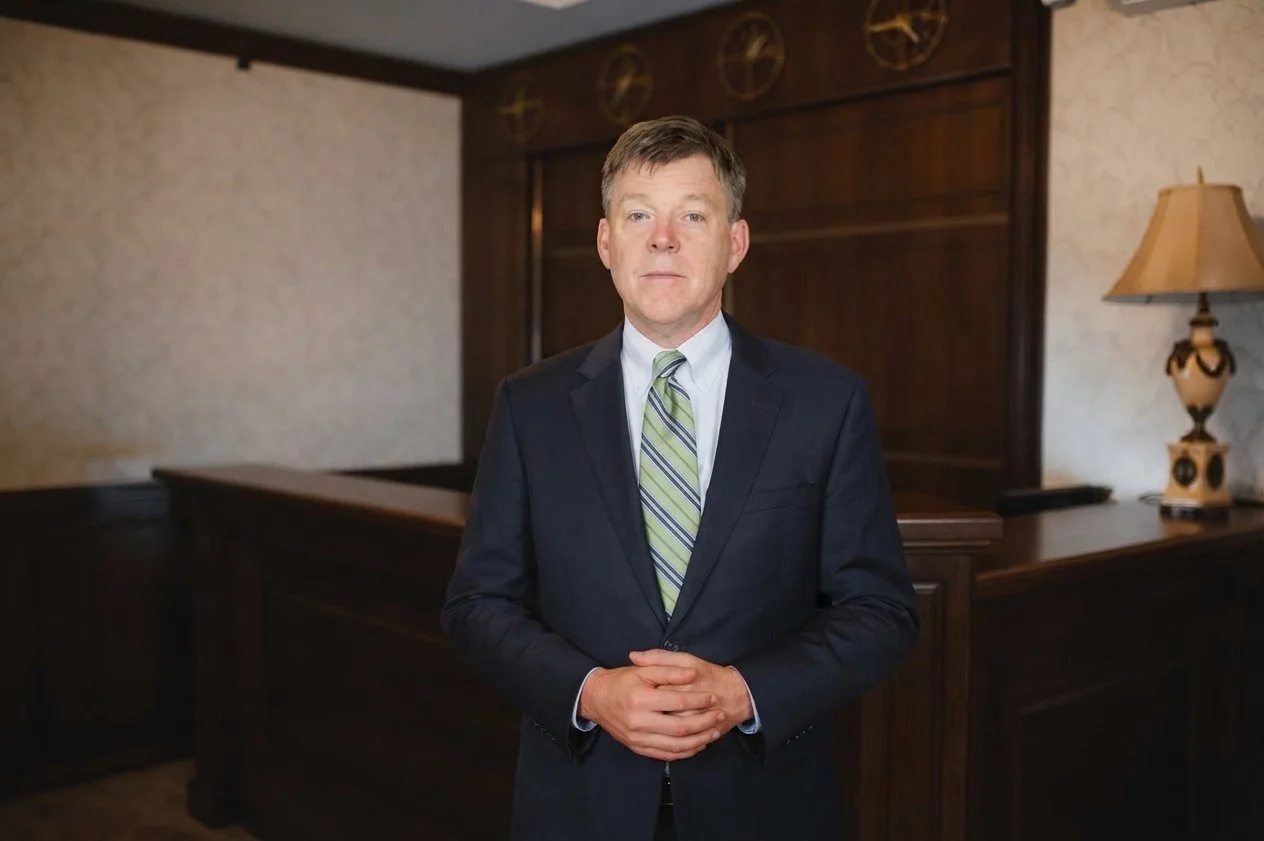
Most Wake County residents meet the Clerk of Superior Court on a bad week. A parent has died and an estate has to be opened. A lender has filed for foreclosure. An aging relative can no longer manage money and needs a guardian appointed. Joe Teague Jr., the Republican candidate for Wake County Clerk of Superior Court on the November 3, 2026 ballot, has spent years watching that counter from the public side of the glass, and he thinks standing there could be a considerably better experience than it is.
Teague is a professional engineer with an MBA. He is not an attorney, and he does not present the office as a law practice. His argument is that the clerk's office is largely a systems problem in a courthouse uniform, and that systems are what engineers spend their careers taking apart.
What the Clerk of Superior Court does
The title sounds like filing and stamping. In North Carolina the clerk is a judicial officer with authority over cases that reach families more often than a superior court trial ever will.
In each county the clerk is the judge of probate, which covers wills and the administration of estates. The office decides guardianship proceedings for adults who can no longer handle their own affairs. It hears foreclosures and a range of special proceedings. It keeps the county's court records and staffs the courtrooms where those records are made. Every one of those functions runs on filing systems, deadlines and the people at the front desk, which is the part Teague keeps returning to.
Who is Joe Teague Jr.?
Teague lives in Raleigh. He has built his career as a licensed professional engineer, a credential he likes to note that most people hear as physical education, and he also holds an MBA. For decades he has followed North Carolina's courts as a private citizen, sitting in on cases up to the state Supreme Court because he finds the machinery interesting.
This is not his first run at the office, and his answers to reporters have stayed consistent across those campaigns.
An engineer's approach to a courthouse
The clerks who have held the Wake County office in recent memory have been attorneys. Teague does not treat that as a scandal, but he does think it produces a particular habit of mind, one that sorts problems into legal categories early and expensively.
An engineer starts somewhere else. You define the problem, you look at how the system currently behaves, and you fix the process before anyone files anything. Teague's view is that a good deal of what arrives at the clerk's counter never needed to become a legal fight at all, and that a clerk who understands process design can head some of it off.
Why he is running in 2026
Court records and the technology that holds them
Teague's first concern is the file system, in the literal sense. Court records, motions logged at the counter, the audio and video that courtrooms are supposed to capture: all of it is infrastructure, and infrastructure degrades quietly when nobody owns it.
He points to courtroom recording equipment: gear that stops working, stays broken, and is discovered only by the person who turns up asking for a record. He wants the technology side of the office treated as a management responsibility rather than a line item somebody else handles.
An office people can approach
His second concern is smaller and, to him, no less serious. He has stood in clerk's offices and noticed how much of the design says keep out, down to the glass between the public and the staff. He has also watched people arrive badly shaken, ask what to do next, and be told that nobody there can help them.
Some of that is unavoidable. Clerks cannot practice law, and there is a real line they are not permitted to cross. But Teague draws a distinction between refusing to give legal advice and refusing to be useful. Pointing someone toward a form, a resource or the right department costs nothing and is not the practice of law. He wants a clerk's office that treats a distressed member of the public as someone to be directed rather than deflected.
The 2026 race for Wake County Clerk of Superior Court
Teague is running against the incumbent. Claudia Croom is a Democrat who took the office in January. Senior Resident Superior Court Judge Paul Ridgeway appointed her to the seat after Blair Williams left it. She is now asking voters for a full term of her own.
Neither candidate had to win a primary. Both March contests were canceled. That leaves a single date on the calendar. Wake County gets one say in this office and it comes in November.
How to vote in the November 3, 2026 election
Voting has already started. Absentee ballots began going out on September 4. Anyone who requested one may be holding it right now.
Registration closes at 5 p.m. on October 9. Early voting opens on October 15 and runs through the end of the month. On that final Saturday the sites shut at 3 p.m. so do not leave it until the evening. You can register and vote on the same trip at any early voting site during that stretch. The last day to request an absentee ballot is October 20.
Election Day is in the coming November. Polls open in the evening and close within an hour. On that day, you vote at your assigned precinct and nowhere else.